


Introduction
In today’s digital world, names can travel faster than stories. One mention on social media, a comment in a forum, or a tag on a video can suddenly spark curiosity across the internet. “Giani Quintanilla” is one of those names that appears in online searches and discussions, often surrounded by questions rather than clear answers.
But what makes a name like this draw attention in the first place? Is it fame, family connection, or simply the modern habit of searching everything we come across online? This article explores the broader context around the name, how public curiosity forms, and why certain identities become topics of interest even when little verified information is available.
Rather than focusing on assumptions, we’ll look at the social, cultural, and digital factors that shape how names gain attention in the internet age.
The Mystery Behind the Name: Who is Giani Quintanilla?
When a name appears online without a clear background, it often creates a vacuum of information. That vacuum gets filled with speculation, guesses, and sometimes misinformation.
In the case of “Giani Quintanilla,” there is limited publicly verified biographical data available in mainstream or authoritative sources. This makes it difficult to define a specific identity with certainty.
However, what is clear is how modern search culture works. A single name can trend due to:
- Association with a well-known surname
- Mentions in social media posts
- Curiosity-driven searches
- Confusion with similarly named individuals
Instead of focusing on uncertain personal details, it is more meaningful to understand why such curiosity arises in the first place.
Think of it like hearing a song without knowing the artist—you become curious not just about the melody, but about the story behind it.
The Significance of the Quintanilla Surname
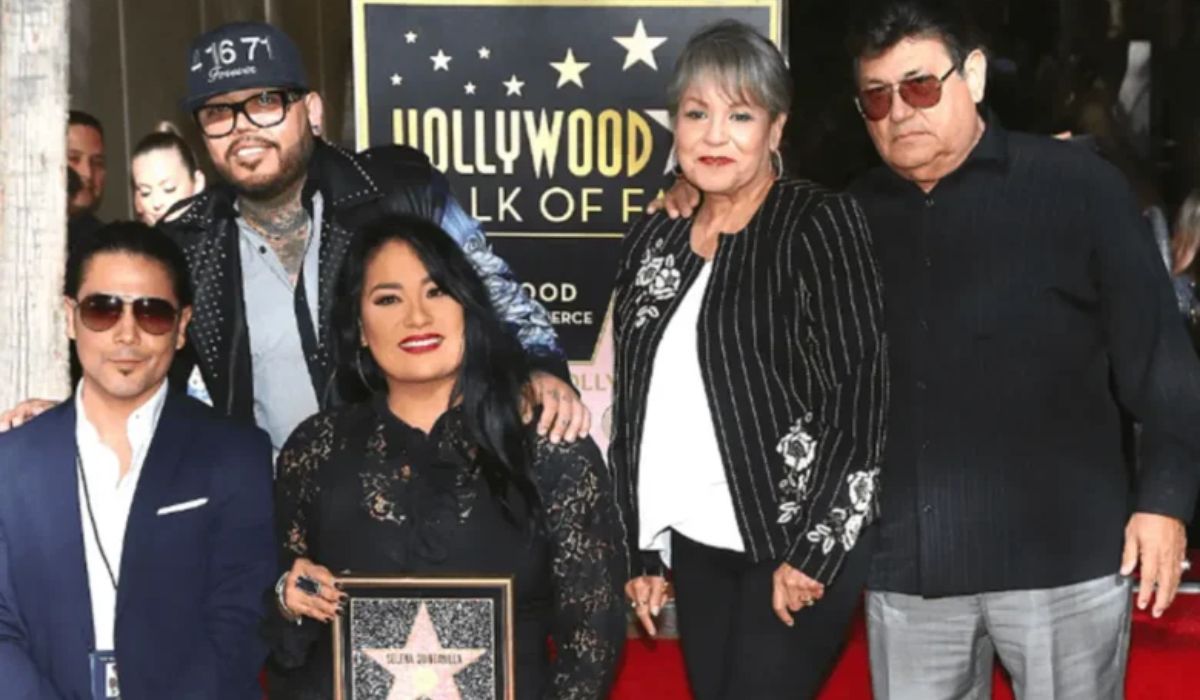
The surname Quintanilla carries cultural recognition, especially in Latin music and entertainment history. Many people associate it with the legacy of iconic singer Selena Quintanilla, whose influence continues to shape music, fashion, and pop culture decades after her passing.
Because of this strong cultural presence, any mention of the surname can naturally draw attention. People often wonder:
- Is there a family connection?
- Is the person part of a known lineage?
- Or is it simply a shared surname?
Surnames often act like bridges between personal identity and collective memory. When a name resembles one tied to fame, curiosity tends to increase automatically—even if there is no confirmed relationship.
This shows how deeply cultural memory influences online behavior.
Public Curiosity in the Digital Age
We live in a time where curiosity is instantly rewarded. With just a few taps, we can search names, locations, or events and get thousands of results.
But here’s the catch: not all information online is accurate or verified.
Public curiosity today is driven by:
- Social media snippets
- Short-form videos
- Comment sections and discussions
- Search engine suggestions
When a name appears repeatedly in these spaces, people naturally assume importance. It’s similar to hearing whispers in a crowded room—you may not know the full story, but you want to know what everyone is talking about.
This is how even lesser-known names can gain unexpected attention.
Social Media and the Construction of Identity
Social media has changed the way identity works. In the past, a person’s story was mainly shared through official records, news, or direct communication. Today, identity is often shaped by:
- Posts
- Tags
- Shared images
- Algorithm-driven visibility
A name like “Giani Quintanilla” may appear in different contexts online, and each mention contributes to a fragmented digital identity.
But fragmentation can be misleading. Without context, people may connect unrelated pieces of information and form assumptions that are not accurate.
This is why online identity should always be viewed carefully—like looking at pieces of a puzzle without knowing the final picture.
Challenges of Limited Public Information
One of the biggest challenges in the digital era is distinguishing between available information and verified information.
When little is known about a person publicly, several issues arise:
- Misidentification
- Assumptions based on surname or appearance
- Repetition of unverified claims
- Confusion with similarly named individuals
In such cases, the absence of reliable data does not automatically mean importance or fame—it simply means information is not documented or widely accessible.
This is an important distinction that helps prevent misinformation from spreading.
How Online Narratives Spread
Online narratives often grow without centralized control. A single mention can be reposted, reshared, or reinterpreted across platforms.
The process usually looks like this:
- A name appears in a post or comment
- Others search it out of curiosity
- Search activity increases visibility
- Algorithms amplify the trend
- More speculation follows
Before long, a simple mention can turn into a widely searched topic.
This cycle shows how digital attention is not always proportional to real-world significance. Sometimes, it’s just momentum.
The Role of Family Names and Genealogy
Family names carry history. They can represent heritage, cultural identity, and generational stories. The surname Quintanilla is no exception, as it has historical and cultural resonance in Latin communities.
Genealogy often sparks interest because people want to understand:
- Where they come from
- Whether they are connected to well-known families
- How names travel across generations
However, shared surnames do not always indicate direct family ties. Many names exist across regions and families without any connection.
It’s similar to having the same first name as someone famous—it creates recognition, but not necessarily relation.
Media Influence and the Risk of Misinformation
The internet is full of content creators, bloggers, and social pages that often share information quickly. While this increases accessibility, it also increases the risk of:
- Incorrect assumptions
- Misleading headlines
- Out-of-context references
- Repeated inaccuracies
When a name like Giani Quintanilla appears in such environments, it may be discussed without proper verification.
This is why media literacy is important. Readers should always ask:
- Is this source credible?
- Is there confirmation from reliable outlets?
- Or is this just repetition of online speculation?
Critical thinking acts as a filter in an otherwise noisy digital world.
Cultural Impact of Recognizable Names
Certain surnames carry emotional or cultural weight. When people encounter them, they may immediately associate them with:
- Music legends
- Historical figures
- Entertainment icons
- Cultural movements
This association can unintentionally shape how individuals with similar names are perceived online.
It’s a reminder that names are not just labels—they are symbols. And symbols often carry meaning beyond the individual.
In this sense, public curiosity is not always about a person directly, but about what their name represents in collective memory.
Privacy in the Internet Era
Privacy has become one of the most important topics in the digital age. With so much information available, it is easy for personal details to be:
- Misinterpreted
- Overshared
- Taken out of context
Not every name that appears online belongs to a public figure. Many individuals prefer to keep their lives private, and that choice deserves respect.
The challenge today is balance—between curiosity and responsibility, between access and ethics.
Just because something can be searched does not always mean it should be deeply analyzed or assumed.
Conclusion
The curiosity around names like Giani Quintanilla highlights a bigger story about how we interact with information today. In a world driven by instant searches and rapid sharing, even a simple name can spark widespread interest without a clear origin story.
Rather than focusing on assumptions, it’s more meaningful to understand the systems behind that curiosity—how digital platforms shape attention, how surnames carry cultural weight, and how quickly narratives can form online.
At its core, this is not just about one name. It is about how we, as internet users, interpret identity in an age where information is abundant but not always complete.
FAQs
1. Why is the name Giani Quintanilla searched online?
The name appears in online spaces where curiosity and surname recognition often lead people to search for more information, even when verified details are limited.
2. Is Giani Quintanilla a public figure?
There is no widely confirmed public record identifying this name as belonging to a mainstream public figure.
3. Is there a connection to Selena Quintanilla’s family?
There is no verified evidence confirming any direct family connection. Shared surnames do not necessarily indicate relation.
4. Why do unknown names become popular online?
Online trends, social media mentions, and algorithm-driven suggestions can make even lesser-known names appear frequently in searches.
5. How should readers approach information about lesser-known individuals?
It is best to rely on verified sources, avoid assumptions, and be cautious about misinformation or unconfirmed online claims.